

Many builders rush into LGA 1150 hardware purchases without checking exact memory compatibility, which usually leads to a frustrating afternoon of troubleshooting. Matching your processor generation to the right chipset prevents endless compatibility headaches.
Hunting down the best 1150 motherboards requires looking past flashy marketing terms to find stable power delivery and reliable audio codecs. Let us compare two solid choices that keep older setups running reliably.
Key Takeaways
- Prioritize boards with robust power phase design to ensure stable voltage delivery during long computing sessions.
- Verify that the physical dimensions fit your computer case, as ATX form factor requires specific mounting standoffs.
- Check the maximum memory capacity and speed supported, noting that DDR3 memory limits upgrade paths compared to newer standards.
- Confirm the availability of SATA 6Gb/s ports to get the fastest transfer speeds from your solid state drives.
- Look for onboard audio improvements like isolated circuit paths if you prefer clean sound without dedicated sound cards.
| Reliable Everyday Choice | 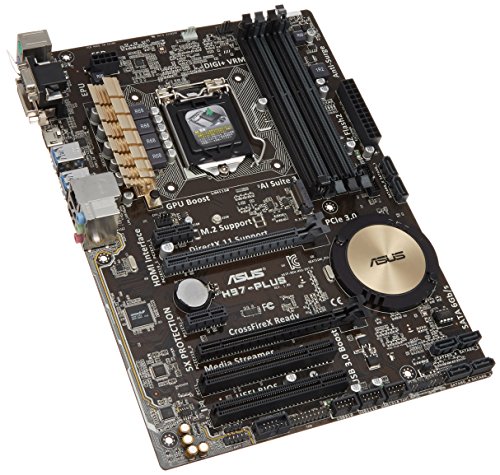 |
ASUS H97-PLUS ATX LGA 1150 Motherboard | Solid build quality | Reliable daily stability | Generous expansion room | View on Amazon | Read Review |
| Budget Gaming Favorite |  |
Gigabyte GA-H97-Gaming 3 Intel Motherboard | Enhanced gaming audio | Dedicated networking chips | Strong value proposition | View on Amazon | Read Review |
More Details on Our Top Picks
-
ASUS H97-PLUS ATX LGA 1150 Motherboard
If you want to build a dependable workstation or standard office machine without spending a fortune, this ASUS H97-PLUS board makes a very sensible foundation. You get solid build quality and stability from a trusted manufacturer, which keeps your system running smoothly through long hours of spreadsheet work or daily browsing.
The layout provides plenty of room for expansion cards and standard cooling setups. But keep in mind that the older DDR3 memory standard means you will not get the blazing speeds found in modern rigs.
- Brand:ASUS
- Form Factor:ATX
- Memory Type:DDR3
- Memory Speed:2600 MHz
- Socket Type:LGA 1150
- Additional Feature:Enhanced power delivery
- Additional Feature:Multiple PCIe slots
- Additional Feature:Built-in audio shielding
-
Gigabyte GA-H97-Gaming 3 Intel Motherboard
Gamers building a mid-range system on a strict budget will appreciate what the Gigabyte GA-H97-Gaming 3 brings to the desk. This board focuses heavily on networking and audio enhancements that actually improve your interactive sessions, rather than just adding flashy lights.
You get dedicated ports for high-end audio gear and specialized networking chips that help reduce lag during intense matches. Just remember that the older H97 chipset does not support processor overclocking, so you have to run your CPU at stock speeds.
- Brand:Gigabyte
- Form Factor:ATX
- Memory Type:DDR3
- Interface:SATA 6Gb/s and USB 3.0
- Socket Type:LGA 1150
- Additional Feature:High-end audio capacitors
- Additional Feature:Optimized LAN port
- Additional Feature:Dual BIOS protection
Frequently Asked Questions
Can I use a sixth-generation Intel CPU in an LGA 1150 motherboard?
No, you cannot use newer processors because Intel changed the physical pin layout with the subsequent generation. You must stick to fourth and fifth-generation chips for this platform. Check your CPU model number carefully before purchasing components. Putting the wrong chip in the socket can bend the delicate metal pins.
What is the difference between H81 and Z97 chipsets?
The H81 chipset is designed for budget builds and lacks features like CPU overclocking and RAID support. It works fine for basic web browsing and media streaming. The Z97 chipset is the enthusiast choice for maximum performance. It supports memory overclocking, high-speed storage interfaces, and multiple graphics cards.
Do LGA 1150 motherboards support modern graphics cards?
Yes, almost every LGA 1150 board includes a standard PCIe 3.0 slot that accepts modern graphics cards. The bottleneck is usually your CPU performance rather than the motherboard slot itself. You just need to make sure your power supply has enough wattage and the right cables to power your chosen card. Physical clearance inside your computer case is another important factor to verify.
Why are these older motherboards still relatively expensive?
Supply and demand dictate the market for legacy hardware, as manufacturers stopped making these parts years ago. Finding a factory-sealed board often commands a collector premium. Most available options on the market today are either used or refurbished. You have to shop carefully to find reliable units that still include the original IO shield and accessories.
What kind of RAM do I need for these boards?
These motherboards exclusively use DDR3 memory modules. You cannot install modern DDR4 or DDR5 RAM because the physical notch on the stick and the pin count are completely different. Most boards support speeds up to 1600 MHz natively, though some enthusiast models handle faster clocked memory kits. Always check the manufacturer memory support list for guaranteed compatibility with your specific RAM kit.