

Can this single board handle running three distinct virtual machines without throttling? Setting up a home lab or a dedicated server rack feels a bit like conducting an orchestra where every musician plays a different genre.
Building a robust system requires picking out the best motherboards for virtualization so your hypervisor never skips a beat. Let us examine four standout options that handle heavy workloads with ease.
Key Takeaways
- Prioritize ECC memory support to prevent data corruption during heavy virtual machine loads.
- Check the PCIe slot configuration carefully to ensure you have enough bandwidth for multiple network cards and storage controllers.
- Look for dual Ethernet ports so you can easily bridge networks and isolate virtual traffic.
- Verify the chipset and socket compatibility with multi-core processors before buying your CPU.
- Ensure the board form factor matches your enclosure, especially if you are building a compact server.
| Reliable Multi GPU Powerhouse |  |
ASUS Prime Z390-P ATX Motherboard | Six PCIe expansion slots | Reliable Intel 8th generation support | Fast USB 3.1 ports | View on Amazon | Read Review |
| Compact Server Foundation |  |
C612 Mini ITX NAS Motherboard | Dual 10GbE ports | ECC memory support | Ten SATA connections | View on Amazon | Read Review |
| Enterprise Grade Workhorse |  |
Wisoqu MS S1561 Server Motherboard | IPMI remote management | Eight DIMM slots | Strong DDR4 support | View on Amazon | Read Review |
| Budget Virtualization Starter |  |
GIGABYTE GA-A320M S2H MicroATX Motherboard | Affordable AM4 entry | Compact microATX size | Reliable basic connectivity | View on Amazon | Read Review |
| Efficient Storage Brain | 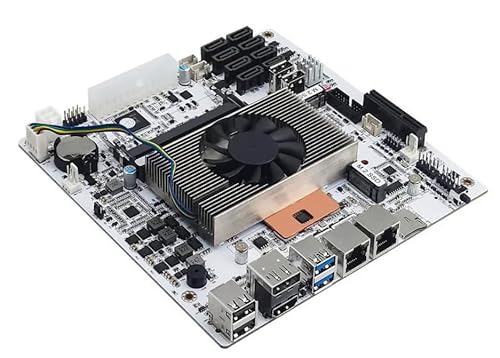 |
NAS Motherboard with Core i5 | Integrated Core i5 CPU | Dual 2.5GbE ports | Dual NVMe slots | View on Amazon | Read Review |
| Dual Processor Scalability | 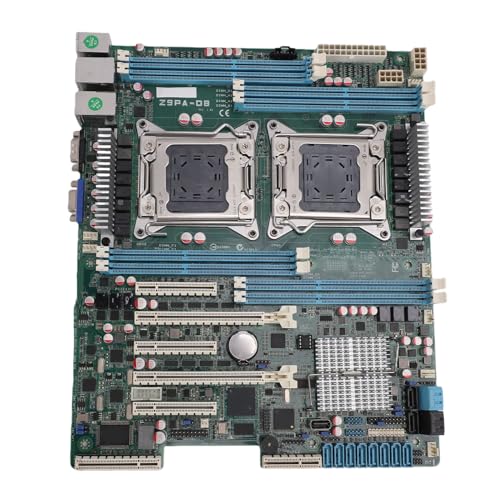 |
Gugxiom Workstation Dual CPU Motherboard | Dual CPU sockets | Workstation class performance | Standard SATA III | View on Amazon | Read Review |
| Quiet Home Server Hub |  |
i5 8265U NAS Mini ITX Motherboard | Dual 2.5GbE LAN | Eight SATA ports | Compact Mini-ITX build | View on Amazon | Read Review |
| Retro Server Value |  |
SENECESLI X79 C602 Server Motherboard | Eight DDR3 slots | Dual gigabit LAN | Support for E5 processors | View on Amazon | Read Review |
| AI Training Powerhouse |  |
Vvikizy Dual LGA 2011 Motherboard | Dual LGA 2011 sockets | Supports 256GB RAM | Multiple PCIe slots | View on Amazon | Read Review |
| Modern Low Power Node |  |
N150 Mini ITX NAS Motherboard | Pre-installed CPU cooler | Modern DDR5 support | Dual 2.5GbE ports | View on Amazon | Read Review |
More Details on Our Top Picks
-
ASUS Prime Z390-P ATX Motherboard
Building a virtual machine lab often requires juggling multiple expansion cards, and this board handles that layout nicely. You get six PCIe slots alongside Above 4G Decoding support, which helps allocate resources smoothly across dense hypervisor environments.
But keep in mind that this layout was originally marketed toward mining rigs, meaning you miss out on server-grade IPMI management ports. USB 3.1 Gen2 ports provide fast external connectivity for your backup drives, but you will need to supply your own cooling and Wi-Fi solutions.
- Brand:ASUS
- Form Factor:ATX
- CPU Socket:LGA1151
- Ethernet Type:Gigabit LAN
- Storage Slots:Multiple SATA ports
- Additional Feature:Above 4G Decoding
- Additional Feature:Multiple PCIe slots
- Additional Feature:Modern USB connectivity
-
C612 Mini ITX NAS Motherboard
Space-saving home lab setups require smart engineering, and this compact board packs enterprise features into a tiny footprint. Support for ECC memory helps prevent data corruption during heavy virtualization tasks, while the dual 10GbE ports ensure your network bottlenecks disappear.
You do have to work within the tight constraints of a Mini-ITX layout, which leaves zero room for error during cable management. Ten SATA ports and dual M.2 NVMe slots give you surprising storage density for such a small machine.
- Form Factor:Mini-ITX
- CPU Socket:E5 v3/v4
- Ethernet Type:Dual 10GbE
- Storage Slots:10 SATA, 2 M.2
- Additional Feature:Dual M.2 NVMe slots
- Additional Feature:Compact server layout
- Additional Feature:Includes M.2 adapter
-
Wisoqu MS S1561 Server Motherboard
Heavy enterprise workloads demand hardware that will not flinch under pressure, and this board answers that call with robust server specifications. The inclusion of AST2400 IPMI 2.0 allows you to manage your virtual machines remotely even if the operating system crashes completely.
Eight DIMM slots let you stuff this motherboard with massive amounts of RAM for running dozens of virtual guests simultaneously. LGA 2011 3 support means you are pairing this with older but capable multi-core server processors that handle virtualization with ease.
- CPU Socket:LGA 2011-3
- Memory Support:DDR4
- Ethernet Type:Dedicated IPMI and LAN
- Storage Slots:10 SATA III ports
- Additional Feature:AST2400 IPMI 2.0
- Additional Feature:Eight memory slots
- Additional Feature:C612 chipset integration
-
GIGABYTE GA-A320M S2H MicroATX Motherboard
Starting a learning lab on a strict budget calls for basic, dependable hardware that simply gets the job done without extra fuss. This microATX option gives you a clean AMD Ryzen AM4 platform to run a few lightweight virtual machines at home.
The board only includes two DDR4 slots, so your memory ceiling is much lower than what dedicated servers offer. Realtek audio and basic PCIe lanes round out a modest feature set that focuses entirely on affordability and essential functionality.
- Brand:GIGABYTE
- Form Factor:MicroATX
- CPU Socket:AM4
- Memory Support:2 x DDR4
- Ethernet Type:Realtek LAN
- Storage Slots:SATA and M.2
- Additional Feature:HDMI display output
- Additional Feature:USB 3.1 Gen 1
- Additional Feature:Realtek audio codec
-
NAS Motherboard with Core i5
Combining a hypervisor with a network-attached storage system is a great way to consolidate hardware, and this board handles both roles efficiently. The integrated Core i5 8265U processor provides four cores and eight threads, which is plenty of horsepower for running Docker containers and file servers.
Power efficiency is a major highlight here since the mobile CPU sips electricity compared to desktop equivalents. You do miss out on socket upgradeability since the processor is permanently soldered to the board.
- Form Factor:Mini-ITX
- Memory Support:DDR4
- Ethernet Type:Dual 2.5GbE i226V
- Storage Slots:8 SATA, 2 NVMe
- Additional Feature:Pre-installed CPU
- Additional Feature:Dual display outputs
- Additional Feature:PCIe x4 expansion
-
Gugxiom Workstation Dual CPU Motherboard
Virtualization environments often starve for CPU threads before they run out of storage or memory, making dual processor setups very attractive. This board lets you drop in two LGA 2011 processors, turning a desktop case into a multithreaded monster for hosting heavy enterprise virtual machines.
Finding compatible cooling brackets for dual-socket setups in standard chassis can turn into a frustrating puzzle. SATA III and USB 3.0 ports give you standard peripheral connectivity once your processing core is up and running.
- CPU Socket:LGA 2011
- Memory Support:DDR3
- Storage Slots:SATA III
- Additional Feature:Dual processor support
- Additional Feature:USB 3.0 ports
- Additional Feature:Workstation architecture
-
i5 8265U NAS Mini ITX Motherboard
Building a quiet home server requires low-power components that do not require industrial wind tunnel fans to stay cool. This mini ITX board features a built-in mobile processor that balances virtualization duties with minimal power consumption and low heat output.
Expansion is naturally limited by the tiny form factor, giving you just a single PCIe x4 slot for extra cards. Dual 2.5GbE ports compensate for the small size by offering fast network teaming options for your virtual switches.
- Form Factor:Mini-ITX
- CPU Socket:Integrated i5-8265U
- Memory Support:DDR4
- Ethernet Type:Dual 2.5GbE i226-V
- Storage Slots:8 SATA, 2 M.2
- Additional Feature:4K HD and DP
- Additional Feature:Dual NVMe slots
- Additional Feature:TF card slot
-
SENECESLI X79 C602 Server Motherboard
Older enterprise hardware offers a fantastic path to high core counts on a modest budget, and this X79 board embraces that vintage server philosophy. Eight DDR3 DIMM slots allow you to load up on inexpensive legacy memory to feed thirsty virtual machines.
Because it relies on the older C602 chipset, you miss out on modern interface speeds like native USB 3.1 and PCIe 4.0. Dual gigabit LAN ports provide reliable networking, making it a solid choice for a dedicated learning cluster.
- CPU Socket:LGA 2011
- Memory Support:8 x DDR3 DIMM
- Ethernet Type:Dual Gigabit LAN
- Additional Feature:Workstation optimization
- Additional Feature:Multi-slot memory architecture
- Additional Feature:Robust server power design
-
Vvikizy Dual LGA 2011 Motherboard
Deep learning and heavy virtualization share a common need for massive hardware parallelism, and this dual-socket board provides that foundation. Multiple PCIe 3.0 slots give you the physical real estate required to mount several graphics cards for specialized workloads.
You will need a specialized case and a hefty power supply to feed this power-hungry dual-processor configuration safely. Supporting up to 256GB of DDR3 RAM ensures your virtual environments will rarely hit a memory ceiling.
- CPU Socket:Dual LGA 2011
- Memory Support:8 DDR3 Slots
- Storage Slots:SATA III
- Additional Feature:AI training ready
- Additional Feature:Dual CPU architecture
- Additional Feature:Multiple PCIe 3.0 slots
-
N150 Mini ITX NAS Motherboard
Modern low-power cores have gotten remarkably good at running background services and light virtualization tasks without running up your electric bill. This board ships with a pre-installed low-profile CPU cooler, saving you the trouble of hunting down compatible cooling hardware for an obscure socket.
Six SATA ports and DDR5 memory support bridge the gap between legacy storage density and modern bandwidth speeds. The single PCIe slot means your expansion options are strictly limited to one add-in card.
- Form Factor:Mini-ITX
- Memory Support:DDR5
- Ethernet Type:Dual 2.5GbE
- Storage Slots:6 SATA
- Additional Feature:Integrated low-profile cooler
- Additional Feature:Compact Mini-ITX layout
- Additional Feature:High speed memory slots
Frequently Asked Questions
Do I really need ECC memory for a home virtualization lab?
You do not strictly need ECC memory to boot up a hypervisor and run a few basic virtual machines. However, it is strongly recommended because silent data corruption can silently ruin your database files over time.
Can I use a consumer gaming motherboard for virtualization?
Consumer motherboards work wonderfully for entry-level and intermediate virtualization setups. Just remember that they lack server-grade features like remote management IPMI ports and massive memory ceilings.
What is IPMI and why should I care about it?
IPMI stands for Intelligent Platform Management Interface, and it lets you control your server through a web browser even if the operating system crashes. Having this dedicated management port means you never have to plug in a physical monitor or keyboard to fix a boot error.
How many PCIe lanes do I need for multiple GPUs?
Each virtual machine that requires direct hardware passthrough for a GPU typically needs a full x16 physical slot. You must check the motherboard manual to see if sharing lanes will cause your slots to drop from x16 speed down to x8 speed.
How much RAM should my virtualization motherboard support?
Aim for a motherboard that supports at least 128GB of RAM if you want room to grow your virtual environment. Heavy database workloads and multiple operating systems will consume your available memory faster than you might think.