

Remember when upgrading a computer meant simply swapping a graphics card or sliding in a stick of RAM? Now, keeping a machine current feels like navigating a shifting regulatory maze, especially with strict security mandates hanging over your components.
Finding the best motherboards for windows 11 used to be straightforward before firmware requirements became the main hurdle for everyday builders.
Let us look at a few practical add-on modules that solve this exact compatibility puzzle without requiring a completely new system build.
Key Takeaways
- Verify the exact pin configuration of your board before purchasing an encryption module to ensure physical compatibility.
- Check the BIOS settings on your current system to confirm that hardware-based security features are supported and can be enabled.
- Match the manufacturer brand of the module to your specific motherboard to avoid communication errors between the chip and the system.
- Look for firmware version compatibility since older boards might require a BIOS update to recognize the added security hardware.
- Prioritize modules that explicitly support secure boot protocols alongside cryptographic processing to meet all modern operating system requirements.
| Gigabyte System Upgrade |  |
Yeiwenl 12 Pin TPM 2.0 Module | Enables operating system compatibility | Simple motherboard header installation | Dedicated hardware security | View on Amazon | Read Review |
| Dual Brand Flexibility | 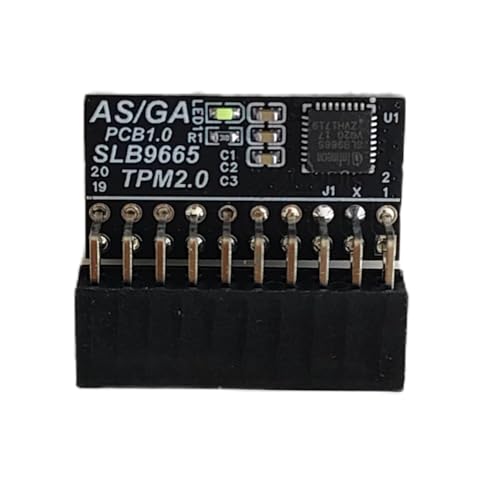 |
Yeiwenl 20-1 Pin TPM 2.0 Module | Supports multiple motherboard brands | Satisfies security installation requirements | Easy physical integration | View on Amazon | Read Review |
More Details on Our Top Picks
-
Yeiwenl 12 Pin TPM 2.0 Module
You need this specific module if your Gigabyte motherboard lacks built-in hardware security and refuses to run modern software. It serves as a direct bridge to meet the strict firmware requirements mandated by modern operating systems without forcing you to buy an entirely new CPU or system board.
The installation process is straightforward, requiring only that you locate the correct header on your system board and match the pin configuration while the power is completely off. One notable limitation is the lack of universal brand support, because this specific 12-pin layout is strictly tailored for Gigabyte hardware and will not fit ASUS or MSI boards.
- Brand:Yeiwenl
- Component Type:TPM 2.0 module
- Pin Count:12 pin
- Compatibility:Gigabyte motherboard
- Function:Encryption security
- Package Count:1
- Additional Feature:Hardware based data encryption
- Additional Feature:Secure boot protocol support
- Additional Feature:Direct header connection design
-
Yeiwenl 20-1 Pin TPM 2.0 Module
Consider this hardware piece when you need to clear the upgrade path on a machine built around an ASUS or Gigabyte platform. It provides the necessary cryptographic processor to satisfy the security checks required for the newest Windows release.
The broad cross-brand compatibility makes it a versatile choice for system builders who manage mixed hardware inventories. Just remember to double-check your motherboard manual, because pin header locations vary wildly between different manufacturing batches and board revisions.
- Brand:Yeiwenl
- Component Type:TPM 2.0 module
- Pin Count:20-1 pin
- Compatibility:Gigabyte motherboard, ASUS motherboard
- Function:Encryption security
- Package Count:1
- Additional Feature:Dual brand support capability
- Additional Feature:Standardized security processor layout
- Additional Feature:Simple plug and play setup
Frequently Asked Questions
Do I need a specific motherboard to run Windows 11?
Windows 11 requires a Trusted Platform Module, specifically TPM 2.0, along with secure boot capabilities. Almost all modern motherboards include these features either built directly into the processor or as a discrete chip on the board. You just need to enable these settings inside the BIOS configuration screen before installing the operating system. Older motherboards might lack these security features entirely.
What is the difference between ATX and Micro-ATX boards?
The main difference lies in physical size and expansion capabilities. ATX boards offer more PCIe slots and extra memory channels, while Micro-ATX boards provide a more compact footprint. Performance is generally identical between the two formats when using the same chipset. Choose based on your available desk space and component needs.
Should I buy a motherboard with built-in Wi-Fi?
Integrated wireless capability is extremely convenient if you cannot run an Ethernet cable to your desk. Motherboards featuring Wi-Fi 6E or Wi-Fi 7 provide fast wireless speeds that rival wired connections. If you already use a wired setup, you can save money by purchasing a non-Wi-Fi model. You can always add a wireless card later if your setup changes.
How many M.2 slots do I actually need?
Having at least two M.2 slots is recommended for most modern PC builds. This allows you to install a primary boot drive and a secondary drive for games and media. High-end motherboards often include four or more slots, which helps if you manage massive video files. Check the lane-sharing rules in the manual, as some slots disable SATA ports when occupied.
Can I update the BIOS without an older CPU?
Many modern motherboards feature a BIOS flashback button on the rear I/O panel. This handy tool lets you update the firmware using a USB flash drive without needing a compatible processor installed first. Always check for this feature if you are pairing a brand-new CPU generation with an older chipset board. It saves you from a frustrating compatibility roadblock during your build.