

You might assume that newer silicon always dwarfs the performance of older generations, but some older chips hold their ground surprisingly well.
The best 10th gen Intel CPUs for gaming provide a fascinating lesson in how architecture ages against modern demands. Staying focused on what truly drives your frame rates helps you pick the right power plant for your rig.
Key Takeaways
- Prioritize higher clock speeds over high core counts if your primary goal is strictly gaming performance.
- Check if your existing motherboard supports the LGA 1200 socket before committing to a 10th generation chip.
- Remember that a K-series processor allows for manual overclocking, which provides a bit more longevity to your build.
- Evaluate the thermal demands of your chosen chip to ensure your cooling solution can handle the heat output.
- Consider whether you have a dedicated graphics card, as some chips omit integrated graphics to focus on pure compute power.
| Ultimate Performance Titan |  |
Intel Core i9-14900K Processor | Extreme clock speeds | Top-tier multi-threaded power | Future-proof architecture | View On Amazon | Read Review |
| High-End Efficiency Expert |  |
Intel Core i9-12900KF Processor | Hybrid core design | Strong single-core speed | Excellent gaming throughput | View On Amazon | Read Review |
| Balanced Gaming Workhorse | 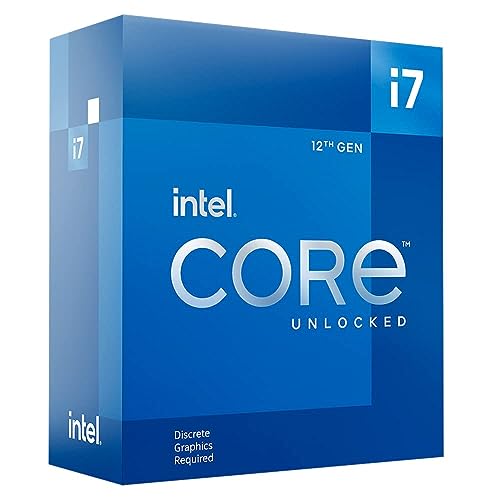 |
Intel Core i7-12700KF Processor | Great performance value | Efficient core distribution | High overclocking headroom | View On Amazon | Read Review |
| Ten-Core Speed Demon |  |
Intel Core i9-10900K Processor | High base frequency | Strong gaming legacy | Reliable overclocking potential | View On Amazon | Read Review |
| Budget Entry Gateway |  |
Intel Core i5-10400 Processor | Very affordable cost | Low power consumption | Stable performance | View On Amazon | Read Review |
| Versatile Powerhouse Choice |  |
Intel Core i9-12900K Processor | Integrated graphics included | Blazing fast speeds | Superior multitasking | View On Amazon | Read Review |
| Cool Running Power | 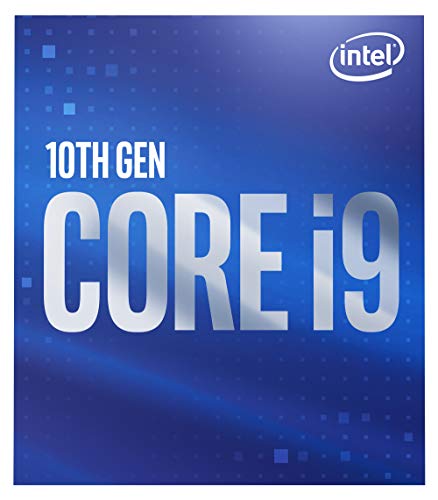 |
Intel Core i9-10900 Processor | Runs cooler than K-series | Efficient power management | Great productivity performance | View On Amazon | Read Review |
More Details on Our Top Picks
-
Intel Core i9-14900K Processor
If you want the fastest possible gaming experience regardless of budget, this chip is your target. It handles high-frame-rate titles with ease, acting like a supercharged engine under the hood of your rig.
Be aware that this beast runs hot and demands a serious cooling solution. You will need a top-tier liquid cooler to keep it from throttling during heavy sessions.
- Processor Series:Intel 14th Gen
- Core Count:24 Cores
- Clock Speed:Up to 6.0 GHz
- Socket Type:LGA 1700
- Power Rating:125W
- Integrated Graphics:Intel UHD Graphics 770
- Additional Feature:Thermal Velocity Boost
- Additional Feature:Turbo Boost Max 3.0
- Additional Feature:PCIe 5.0 support
-
Intel Core i9-12900KF Processor
This chip relies on a hybrid architecture that balances performance cores with efficiency cores. It works well for players who often multitask or stream while they game.
Because it lacks integrated graphics, you must have a dedicated graphics card installed to get any visual output. Think of it as a specialized machine that expects a powerful partner to do the heavy lifting for your monitor.
- Processor Series:Intel 12th Gen
- Core Count:16 Cores
- Clock Speed:Up to 5.2 GHz
- Socket Type:LGA 1700
- Power Rating:125W
- Additional Feature:Unlocked for overclocking
- Additional Feature:DDR5 memory support
- Additional Feature:Smart Cache technology
-
Intel Core i7-12700KF Processor
Many builders find this to be the sweet spot for modern systems. It provides more than enough grunt to keep your games smooth without the excessive heat of the i9 series.
Similar to other K-series chips without the G suffix, you need a discrete GPU to function. It is a solid choice for anyone who wants high performance without spending a fortune on top-tier silicon.
- Processor Series:Intel 12th Gen
- Core Count:12 Cores
- Clock Speed:Up to 5.0 GHz
- Socket Type:LGA 1700
- Power Rating:125W
- Additional Feature:Performance hybrid architecture
- Additional Feature:Support for DDR4 and DDR5
- Additional Feature:Intel Turbo Boost 2.0
-
Intel Core i9-10900K Processor
Even years after its release, this remains a formidable contender for enthusiasts. It offers impressive single-core speeds that keep your frame rates stable in CPU-heavy titles.
The main drawback is that it uses an older socket, which limits your future upgrade path. You are locked into the 400-series ecosystem, so plan your motherboard purchase carefully.
- Processor Series:Intel 10th Gen
- Core Count:10 Cores
- Clock Speed:Up to 5.3 GHz
- Socket Type:LGA 1200
- Power Rating:125W
- Integrated Graphics:Intel UHD Graphics 630
- Additional Feature:Thermal Velocity Boost
- Additional Feature:Intel Optane memory support
- Additional Feature:Soldered thermal interface material
-
Intel Core i5-10400 Processor
If you are building a modest gaming rig on a strict budget, this six-core processor is a reliable starting point. It handles mainstream titles perfectly well when paired with a decent graphics card.
Don't expect it to push high-end resolution gaming or heavy video editing. It is built for a specific purpose: providing a stable, affordable foundation for gaming.
- Processor Series:Intel 10th Gen
- Core Count:6 Cores
- Clock Speed:Up to 4.3 GHz
- Socket Type:LGA 1200
- Power Rating:65W
- Integrated Graphics:Intel UHD Graphics 630
- Additional Feature:Hyper-Threading support
- Additional Feature:Energy efficient design
- Additional Feature:Standard cooling included
-
Intel Core i9-12900K Processor
This is essentially the Swiss Army knife of the 12th generation. By including integrated graphics, it provides a safety net if your primary graphics card ever fails or needs troubleshooting.
It is a demanding chip that requires a robust power supply and a large case for proper airflow. Treat this like a high-performance sports car that needs plenty of room to breathe.
- Processor Series:Intel 12th Gen
- Core Count:16 Cores
- Clock Speed:Up to 5.2 GHz
- Socket Type:LGA 1700
- Power Rating:125W
- Integrated Graphics:Intel UHD Graphics 770
- Additional Feature:Intel Deep Learning Boost
- Additional Feature:Unlocked multiplier
- Additional Feature:Native DDR5 support
-
Intel Core i9-10900 Processor
For those who prefer a stable, locked processor that doesn't require complex cooling, this is a great alternative. It delivers the same core count as the K-series but operates at a lower, more efficient power draw.
It is not meant for manual overclocking, so keep that in mind if you enjoy tweaking your system settings. It works best in a standard, no-fuss gaming build.
- Processor Series:Intel 10th Gen
- Core Count:10 Cores
- Clock Speed:Up to 5.2 GHz
- Socket Type:LGA 1200
- Power Rating:65W
- Integrated Graphics:Intel UHD Graphics 630
- Additional Feature:Intel vPro platform
- Additional Feature:Virtualization technology
- Additional Feature:Low thermal output
Frequently Asked Questions
Can I use a 10th gen CPU with an 11th gen motherboard?
Yes, most LGA 1200 motherboards that ship with 500 series chipsets are compatible with 10th generation processors. This gives you a bit more flexibility when picking your mainboard. Just ensure you check the BIOS support for your specific board model before you start building. Manufacturers usually list processor compatibility clearly on their official support pages.
Is an i9 overkill for gaming?
For most people, an i9 is indeed more power than you need for gaming alone. You are paying for extra cores that benefit video editing or heavy rendering work more than they benefit typical gaming experiences. An i7 or even an i5 often provides nearly identical frame rates in most titles. Save your budget for a faster graphics card instead.
Do I need faster RAM for these processors?
10th gen chips perform best with higher frequency memory, typically around 3000MHz or 3200MHz. Using slower sticks can create a bottleneck for your processor. Ensure your motherboard supports the XMP profile of your chosen RAM kit. You need to enable this in the BIOS settings to actually reach those advertised speeds.
How much power supply wattage is necessary?
It depends on your graphics card, but a 650W or 750W power supply is usually the sweet spot for a 10th gen gaming build. High-end chips can draw significant power during spikes. Don't skimp on your power supply unit quality. A reliable, efficient unit protects your components from sudden voltage fluctuations.
Will these CPUs bottleneck a modern GPU?
You might see a slight bottleneck if you pair a 10th gen i5 with an ultra-high-end card like an RTX 4090 at low resolutions. However, at 1440p or 4K resolutions, the load shifts heavily toward the graphics card. The impact is usually minimal in most scenarios. You will still enjoy a highly responsive gaming experience without needing the latest platform.