

The hum of a hard drive spinning in the corner is a quiet reminder that your digital life is growing faster than your local storage. Managing your photos, backups, and media files requires a processor that doesn't stutter when the workload spikes.
Selecting the best home server CPUs often feels like trying to balance speed against power consumption. You need enough muscle to handle file transfers without your utility bill climbing to the moon. Here is how to pick the silicon that keeps your data moving.
Key Takeaways
- Prioritize a high clock speed if you intend to run real time media transcoding for your home theater.
- Ensure the CPU supports hardware acceleration for encryption to keep your files secure during transfers.
- Verify the thermal design power is low enough to prevent your server from overheating in small enclosures.
- Check that the processor has enough physical cores to manage background tasks like backups and indexing.
- Avoid older architectures that lack support for modern video codecs which are essential for streaming.
| Entry Level Champion |  |
Asustor Drivestor 2 Gen 2 | High speed 2.5GbE networking | Efficient quad core processor | Easy personal cloud setup | View On Amazon | Read Review |
| Modern Creator Hub |  |
UGREEN NAS DXP2800 | Sleek modern interface | Optimized for remote access | Reliable hardware build | View On Amazon | Read Review |
| Reliable Data Workhorse | 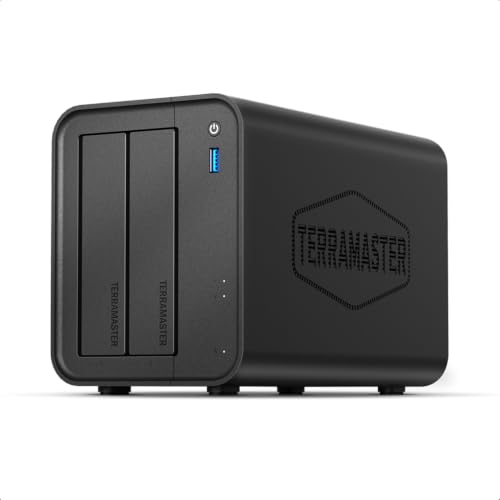 |
Terramaster F2-425 Quad Core | Strong x86 processing power | Generous 4GB memory | Versatile container support | View On Amazon | Read Review |
| Prosumer Performance Powerhouse |  |
UGREEN NAS DXP4800 GT | Four drive storage capacity | Built for heavy throughput | Solid thermal management | View On Amazon | Read Review |
| Versatile Server Alternative |  |
Glorlin Ryzen 7 Mini PC | Powerful Ryzen 7 processor | Fast DDR5 memory | Multiple display outputs | View On Amazon | Read Review |
| Scalable Storage Solution |  |
Terramaster F4-425 4-Bay | Expandable 4-bay capacity | Reliable x86 performance | Great for redundancy | View On Amazon | Read Review |
| High Speed Gaming Server | 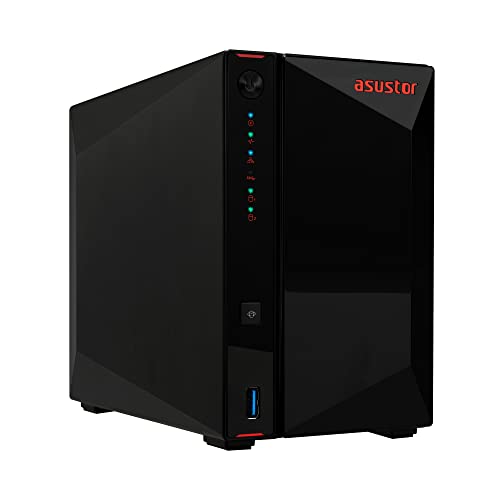 |
Asustor AS5402T NVMe NAS | Four NVMe SSD slots | Rapid data transfer speeds | Dual 2.5GbE ports | View On Amazon | Read Review |
More Details on Our Top Picks
-
Asustor Drivestor 2 Gen 2
If you are just beginning your journey into home media hosting, this unit acts like a trusty anchor for your digital life. It pairs a efficient quad-core processor with a 2.5GbE network port to ensure your movie streams don't stutter during peak hours.
The setup is remarkably straightforward, making it perfect for anyone who wants a personal cloud without needing a computer science degree. However, the limited 1GB of memory means you should stick to basic file management and light media serving rather than running dozens of heavy background apps at once.
- Brand Name:Asustor
- Storage Bays:2
- Processor Type:Quad Core 1.7GHz
- Memory Capacity:1GB DDR4
- Network Speed:2.5GbE
- Additional Feature:4K media transcoding support
- Additional Feature:Low power consumption design
- Additional Feature:Tool free drive installation
-
UGREEN NAS DXP2800
UGREEN has entered the space with a sleek design that prioritizes the needs of remote workers and content creators. It provides a clean interface that feels like a modern operating system, keeping your files organized without the typical clutter found in older NAS software.
This unit excels at handling multiple simultaneous connections, which is useful if you share your home network with family or colleagues. Keep in mind that its 2-bay capacity creates a hard ceiling for your storage growth, so you might need to look toward larger arrays if your raw footage library grows into the multiple terabyte range.
- Brand Name:UGREEN
- Storage Bays:2
- Form Factor:Desktop NAS
- Additional Feature:Remote access support
- Additional Feature:Media streaming capabilities
- Additional Feature:File sync tools
-
Terramaster F2-425 Quad Core
You get a significant performance boost with this x86 quad-core architecture, which handles multitasking much better than the basic ARM-based alternatives. It is a solid choice if you want to run a Plex server or a personal database where you need that extra processing overhead to keep things snappy.
The inclusion of 4GB of RAM gives you enough breathing room to run several containers or services simultaneously. The chassis is functional rather than flashy, which is fine, but be aware that the fan can occasionally become audible when the processor is under load.
- Brand Name:Terramaster
- Storage Bays:2
- Processor Type:Intel Quad Core
- Memory Capacity:4GB
- Additional Feature:Support for multiple RAID levels
- Additional Feature:Efficient file management system
- Additional Feature:Compact footprint
-
UGREEN NAS DXP4800 GT
When your data needs exceed the capabilities of a two-drive system, this 4-bay model provides the necessary breathing room for expansive storage pools. It is built for those who require high throughput, especially when dealing with large video projects that need to be accessed from multiple workstations.
The internal components are positioned to maintain airflow, which helps keep the system cool during long file transfers or backup sessions. Just remember that with four drives spinning at once, the unit does take up a bit more physical desk space than the smaller two-bay alternatives.
- Brand Name:UGREEN
- Storage Bays:4
- Form Factor:Desktop NAS
- Additional Feature:High speed data sync
- Additional Feature:Advanced file sharing permissions
- Additional Feature:Expandable software ecosystem
-
Glorlin Ryzen 7 Mini PC
Sometimes a dedicated NAS isn't the right answer, and that is where this Ryzen 7 powerhouse shines. It serves as a full-featured computer that can run any operating system you prefer, offering far more computational flexibility than a standard locked-down storage box.
With 16GB of DDR5 memory and a high-speed SSD, it handles virtual machines and complex automation scripts with ease. The main drawback is that you will need to manage your own external storage arrays via USB or network mounts since it lacks internal drive bays.
- Brand Name:Glorlin
- Processor Type:Ryzen 7 8745HS
- Memory Capacity:16GB DDR5
- Network Speed:Dual 2.5G LAN
- Form Factor:Mini Desktop
- Additional Feature:USB4 connectivity included
- Additional Feature:WiFi 6 wireless capability
- Additional Feature:Supports four 4K displays
-
Terramaster F4-425 4-Bay
This unit acts as the big brother to the smaller 2-bay models, offering the same x86 processing reliability but with significantly more room to grow. It is a smart pick if you want to build a redundant storage array while leaving room to add more disks as your digital library expands.
The software environment is flexible enough to support various backup protocols and media hosting applications. Be sure to check your power setup, as running four drives consistently draws more energy and generates more heat than the smaller 2-bay units.
- Brand Name:Terramaster
- Storage Bays:4
- Processor Type:Intel Quad Core
- Memory Capacity:4GB
- Additional Feature:RAID redundancy configurations
- Additional Feature:Desktop file server utility
- Additional Feature:Efficient cooling system
-
Asustor AS5402T NVMe NAS
This is a specialized piece of hardware for those who find standard mechanical hard drives too sluggish for their needs. By incorporating four M.2 NVMe slots, it allows for lightning-fast read and write speeds that make it feel like a local drive rather than a network-attached unit.
It is perfect for gamers or creators who need to edit files directly from their server without waiting for long load times. The trade-off is that you are restricted to using SSDs, which usually translates to a higher cost per gigabyte compared to traditional spinning hard drives.
- Brand Name:Asustor
- Storage Bays:2 plus 4 M.2
- Processor Type:Intel Quad Core 2.0GHz
- Memory Capacity:4GB DDR4
- Network Speed:2x 2.5GbE
- Additional Feature:Gaming optimized network performance
- Additional Feature:Flash storage architecture
- Additional Feature:Live stream ready throughput
Frequently Asked Questions
Do I really need a dedicated server CPU for a home setup?
Not at all, as most modern consumer processors are powerful enough for home duty. Desktop chips from Intel or AMD often provide a better balance of price and performance for home users than expensive enterprise-grade hardware. Unless you have specific needs for server-grade features like massive amounts of RAM support, consumer silicon is usually the better choice.
What happens if my server CPU does not have integrated graphics?
If your processor lacks an iGPU, you will need a discrete graphics card to output video for the initial setup. You might also find that media streaming apps struggle to convert files, which puts a heavy strain on your CPU resources. If you plan on doing a lot of media streaming, prioritize a chip with built-in graphics to simplify your build.
Is a higher clock speed more important than more cores?
It depends entirely on what software you are running on your server. For a simple file server, high clock speed makes file transfers feel quick and responsive. However, if you are running many background services or virtual machines, the extra cores will serve you much better than a faster clock speed.
How much power will my server draw while idling?
Most home servers spend the majority of their time idling, so look for a chip with a low idle power draw. Efficient processors can sit at a fraction of their maximum wattage when they aren't busy. A well-optimized setup should consume very little total electricity throughout the day, which keeps your monthly utility costs manageable.
Should I buy a used enterprise CPU for my home server?
Used hardware can be a bargain, but it often comes with a high power consumption cost and proprietary cooling requirements. These older chips are like gas-guzzling muscle cars, as they offer raw power but lack modern energy-saving features. You are usually better off with a modern mid-range processor that runs cooler and supports the latest technologies.