

Buying a motherboard for an RTX 3080 setup has almost nothing to do with buying the actual graphics card. Most shoppers chase the wrong components entirely.
Finding the best motherboards for 3080 requires balancing physical layout and component clearance. Read on to see four distinct options.
Key Takeaways
- Prioritize board dimensions and form factor to ensure your massive graphics card actually fits inside your chassis.
- Check the socket type and chipset generation carefully to guarantee complete processor compatibility before purchasing.
- Confirm the memory standard and maximum speed supported by the board to avoid bottlenecks with high-end RAM.
- Verify the availability of adequate PCIe slots and thermal cooling solutions for heavy multi-GPU or high-wattage hardware setups.
- Look closely at proprietary OEM connectors if you plan on dropping replacement boards into prebuilt branded desktop systems.
| Thermal Performance Booster | 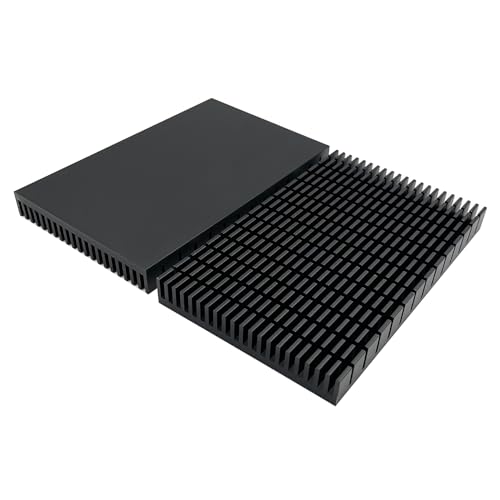 |
Awxlumv Aluminum Large Heatsink | Passive cooling design | Large surface area | Durable aluminum material | View on Amazon | Read Review |
| Legacy System Replacement |  |
Desktop Pro3000 Motherboard G45 | Exact OEM fit | Restores legacy systems | Specific part numbers | View on Amazon | Read Review |
| Compact Form Factor |  |
CN-0Y8CJN SFF Motherboard | Small form factor | Compact layout | OEM replacement part | View on Amazon | Read Review |
| Vintage Overclocking Platform |  |
XFX nForce 790i Ultra Motherboard | Enthusiast BIOS controls | Vintage overclocking support | Classic SLI capability | View on Amazon | Read Review |
More Details on Our Top Picks
-
Awxlumv Aluminum Large Heatsink
Keeping your high-end graphics card cool requires serious hardware, and large aluminum heatsinks do the heavy lifting here. You will appreciate this solution if you want to lower operating temperatures on your backplate or motherboard components without a noisy fan setup. The passive cooling design relies on extended fin surface area to dissipate heat quietly.
Installation takes a bit of patience because you need to align the 150 x 93 mm footprint correctly with your layout. But once mounted, it handles thermal loads quite well. The main limitation is that you must measure your chassis clearance carefully before buying, since these blocks are quite bulky.
- Brand:Awxlumv
- Type:Heatsink
- Size:5.9 x 3.6 x 0.59 inch
- Material:Aluminum
- Count:2 Pcs
- Additional Feature:Black heat sinks fins
- Additional Feature:Backplate PCB compatibility
- Additional Feature:Cooler RTX 3090 3080 ti support
-
Desktop Pro3000 Motherboard G45
Finding replacement parts for older enterprise desktops can feel like hunting for a needle in a haystack, which is where this board comes in handy. It suits technicians or hobbyists who need to breathe new life into an aging HP Pro3000 machine. You get standard proprietary connections designed specifically to fit that exact chassis layout and power supply configuration.
Compatibility is straightforward if you match the part numbers to your existing hardware. But you should remember that this board is strictly for maintenance tasks, not for building a modern gaming rig. Performance will remain capped by dated chipset limitations and older memory standards.
- Type:Motherboard
- Speed:Pro3000
- Additional Feature:Pro3000 compatibility
- Additional Feature:Part number 587302-001
- Additional Feature:Part number 622476-001
-
CN-0Y8CJN SFF Motherboard
Small form factor builds demand specialized components, and this proprietary mainboard fits tightly into cramped spaces. You will find this option useful if you are repairing a compact prebuilt system that requires specific mounting holes and power headers. The layout prioritizes space efficiency above all else.
Working with proprietary small form factor parts means your upgrade path is essentially zero. But the board delivers reliable operation for standard office tasks or media consumption. Just watch out for proprietary power connectors that might not work with standard aftermarket power supplies.
- Type:Mainboard
- Additional Feature:CN-0Y8CJN model
- Additional Feature:HMF7C compatibility
- Additional Feature:V5WW9 support
-
XFX nForce 790i Ultra Motherboard
Retro enthusiasts chasing the thrill of vintage hardware will recognize this classic enthusiast board immediately. It targets collectors and benchmarkers who want to experiment with LGA 775 processors and older DDR3 memory configurations. You get robust BIOS tuning options that were cutting-edge during the era of triple SLI setups.
Finding compatible processors and fast memory kits takes some dedicated searching on the secondhand market today. But the board remains a fun piece of computing history for a nostalgia build. Be prepared to deal with aging capacitors and legacy drivers that require some troubleshooting to run smoothly.
- Brand:XFX
- Type:ATX Motherboard
- Speed:1600Mhz FSB
- Additional Feature:nForce 790i Ultra chipset
- Additional Feature:DDR3 memory support
- Additional Feature:Socket LGA 775 compatible
Frequently Asked Questions
Do I need a PCIe 4.0 motherboard for an RTX 3080?
You do not strictly need PCIe 4.0 because the card is fully backward compatible with PCIe 3.0 slots. However, running the card on an older generation standard can create a slight performance bottleneck in bandwidth-heavy scenarios. If you are buying a new motherboard anyway, you should definitely choose a PCIe 4.0 or PCIe 5.0 model to get your money's worth. It ensures your hardware communicates at maximum speed.
Will an older processor bottleneck my RTX 3080?
Yes, pairing this card with an outdated CPU will definitely limit your frame rates, especially at 1080p resolution. Your processor needs to keep up with the massive amount of data the graphics card processes every second. If you use a CPU that is more than three generations old, consider upgrading your processor and motherboard at the same time. Otherwise, your expensive graphics card will sit idle waiting for instructions.
How many power phases do I actually need on the motherboard?
For a standard gaming build without extreme overclocking, a board with 10 to 12 power phases is more than enough. High-end boards feature 14 or 16 phases, which is really only necessary for heavy enthusiast overclocking on top-tier CPUs. The most important part is not just the number of phases, but the quality of the components and the size of the cooling heatsinks. Good cooling prevents the power delivery from overheating during marathon gaming sessions.
Can I fit a 3080 on a Micro-ATX motherboard?
Absolutely, as long as your computer case has enough physical clearance for the length of the graphics card. The primary PCIe x16 slot on a Micro-ATX board is wired for full speed just like a standard ATX board. Just keep in mind that a large graphics card might block lower slots, making it harder to install extra expansion cards. Check the dimensions of both your case and your chosen card before buying.
Is built-in Wi-Fi worth paying extra for on a motherboard?
Built-in Wi-Fi is definitely worth the extra cost if you cannot run a wired Ethernet cable directly to your router. Modern boards usually include Wi-Fi 6 or Wi-Fi 6E, which offers fast speeds and low latency for online gaming. If you always plug your PC straight into the router via cable, you can safely save a few dollars by choosing a non-Wi-Fi model. You can always add a wireless PCIe card later if your living situation changes.