

People often assume that finding the best motherboards for audio simply means buying the most expensive board on the store shelf. But pure board quality matters very little if your internal connectors cannot physically reach your front panel jacks.
Connecting your favorite microphone or headphone set shouldn't feel like playing a frustrating game of electronic Twister inside a cramped computer case.
Short cables and poor routing can ruin a clean build faster than you can say short circuit. Let us look at five clever ways to fix your audio routing headaches right now.
Key Takeaways
- Measure the distance between your motherboard headers and front panel ports before purchasing any extension cables.
- Look for 24AWG tinned copper wiring to ensure stable signal transfer and better resistance against internal corrosion.
- Check connector pin configurations carefully to confirm you are matching 9PIN HD Audio layouts correctly.
- Consider splitter cables if you need to route audio signals to multiple destinations from a single motherboard header.
- Verify whether your specific motherboard requires SPDIF brackets for optical audio output rather than standard analog headers.
| Neat Cable Management | 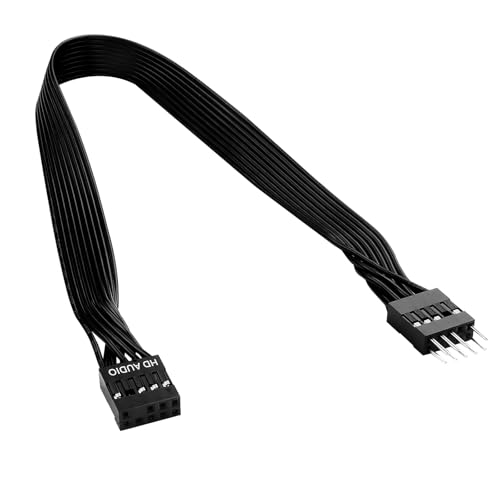 |
ELFJMZP 30cm Front Audio Extension Cable | 30cm length | HD audio 9pin | Tinned copper wire | View on Amazon | Read Review |
| Flexible Routing Choice |  |
LUORNG Chassis Cabling Audio Extension | 9pin HD audio | Sleeved cabling | Standard male-female | View on Amazon | Read Review |
| Dual Pack Value | 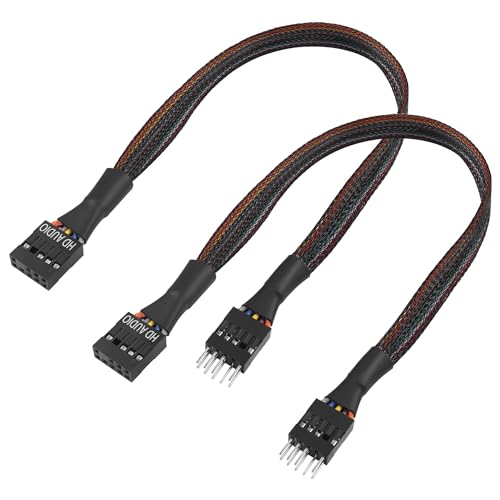 |
QIANRENON 9Pin HD Audio Cables | Two cables included | Standard 9pin layout | Flexible 30cm reach | View on Amazon | Read Review |
| Signal Splitting Solution | 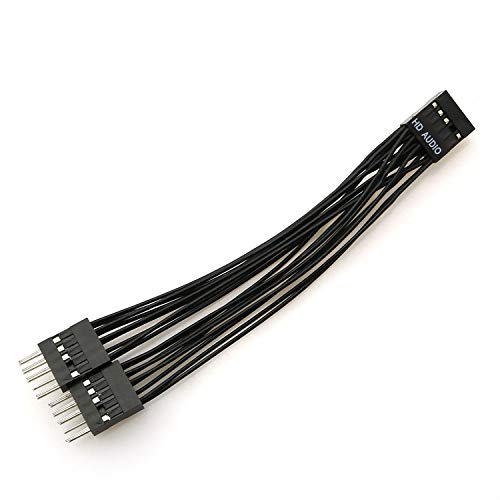 |
ZRM&E Audio Splitter Cable Lead | 1 female to 2 male | High definition audio | Compact 10cm reach | View on Amazon | Read Review |
| Digital Audio Upgrade |  |
Acxico SPDIF Optical Out Bracket | SPDIF optical output | RCA out ports | Rear bracket design | View on Amazon | Read Review |
More Details on Our Top Picks
-
ELFJMZP 30cm Front Audio Extension Cable
Building a clean audio setup inside a dense computer case requires some clever cable routing. This 30cm extension cable bridges the gap between your case ports and motherboard without cluttering the main chamber.
You get solid 24AWG tinned copper wiring inside a discreet black ribbon design. Just watch out for tight spaces, because rigid routing might require patience during installation.
- Brand:ELFJMZP
- Type:Extension cable
- Length:30cm
- Material:Tinned copper
- Connector Type:Male to Female
- Additional Feature:Black ribbon design
- Additional Feature:ATX front audio compatible
- Additional Feature:Neat cable management
-
LUORNG Chassis Cabling Audio Extension
Managing internal wires can feel like untangling holiday lights after a long year in the attic. This male to female connection sleeve helps you route front audio signals around bulky graphics cards and power supplies.
The black sleeving blends nicely into most dark chassis interiors. But remember that this cable only extends your existing reach, so it will not solve ground loop interference or signal noise issues.
- Brand:LUORNG
- Type:Extension cable
- Length:30cm
- Connector Type:9PIN HD Audio
- Additional Feature:Chassis cabling use
- Additional Feature:Clean aesthetic sleeve
- Additional Feature:Standard motherboard pinout
-
QIANRENON 9Pin HD Audio Cables
Having a spare cable on hand saves you from frustrating delays mid-build. This two-pack of extensions gives you enough length to route audio signals through larger full tower chassis.
Each 11.8 inch cable features standard pinouts for broad motherboard compatibility. Keep in mind that bundling two thick wires in a narrow behind-tray channel requires careful zip-tying.
- Brand:QIANRENON
- Type:Extension cable pair
- Length:30cm
- Connector Type:9pin male to female
- Additional Feature:ATX front audio ready
- Additional Feature:Two pieces in pack
- Additional Feature:Standard connector sizing
-
ZRM&E Audio Splitter Cable Lead
Splitting audio signals without losing fidelity is tricky business. This one female to two male splitter lets you route motherboard audio to multiple destinations simultaneously.
The compact 10cm length keeps excess slack to a strict minimum near sensitive headers. Just note that shorter leads mean less flexibility when positioning components far apart.
- Brand:ZRM&E
- Type:Splitter cable
- Length:10cm
- Connector Type:9-Pin
- Additional Feature:Expansion line design
- Additional Feature:Motherboard audio splitter
- Additional Feature:Dual male leads
-
Acxico SPDIF Optical Out Bracket
Motherboards often leave out digital audio ports on the rear I/O panel. This bracket plate cable taps directly into onboard headers to add optical and RCA outputs to your system.
It provides a clean digital connection path for external speakers and home theater receivers. Be sure to check your specific motherboard pin layout first, because proprietary header pinouts can vary by manufacturer.
- Brand:Acxico
- Type:Out plate cable bracket
- Connector Type:SPDIF and RCA
- Additional Feature:ASUS MSI Gigabyte compatible
- Additional Feature:PCI slot bracket included
- Additional Feature:Digital audio expansion
Frequently Asked Questions
Do I need a dedicated sound card if I buy a high end motherboard for audio production?
Usually, the answer is no because modern boards come with isolated audio circuits and premium built-in codecs that rival older dedicated cards. If you already own a professional USB audio interface, the motherboard audio mainly serves as a backup or secondary output for casual media. Save your money for better studio monitors or faster solid-state drives unless you have a specific need for specialized analog inputs. The onboard components handle most day-to-day production tasks with surprising clarity.
How do I stop a high pitched whine from coming through my studio monitors?
That annoying whine usually comes from a ground loop or electrical interference jumping from the graphics card to the audio traces. Try plugging your computer and your audio monitors into the exact same wall outlet or power strip to balance the electrical ground. If that fails, using an optical cable for digital out completely severs the physical electrical connection, eliminating ground loop hums entirely. Motherboards with robust physical shielding also reduce this kind of internal noise pollution.
Is Thunderbolt support necessary for a music production computer?
Thunderbolt is not strictly mandatory, but it remains the gold standard for connecting low latency professional audio interfaces. Having built-in support or a dedicated Thunderbolt header saves you from buying an expensive add-in card later. Check that the motherboard explicitly supports audio device hot plugging if you plan to move your interface between different workstations. This ensures the operating system recognizes your hardware instantly without requiring a full system reboot.
What size motherboard works best for a quiet studio rig?
Standard ATX motherboards offer the best balance of cooling capacity and component spacing for a quiet studio environment. Larger boards allow for bigger, slower-spinning case fans that move plenty of air without generating loud, distracting fan whines. Mini-ITX builds look sleek on a desk, but the cramped spaces often force fans to spin at maximum RPM under heavy CPU loads. Silence is golden when tracking vocals, so give your components enough breathing room.
Does RAM speed affect my ability to run heavy virtual instruments?
Fast RAM drastically improves performance when you load massive sample libraries into active memory for live playback. Look for a motherboard that supports high speed DDR5 memory and offers stable XMP or EXPO overclocking profiles. Pairing quick memory with adequate capacity prevents audio dropouts when you trigger complex orchestral arrangements. Aim for at least 32 gigabytes of RAM to keep your digital audio workstation running smoothly during dense mix sessions.