

Many people assume you need a massive, expensive server rack to handle high-definition media files at home. In reality, modern hardware has become remarkably compact and efficient.
You can often find the best CPUs for plex 4k transcoding in hardware much smaller than a traditional desktop. Getting your media library to stream reliably is less about raw power and more about picking the right integrated graphics chip. Let's look at a few setups that handle this work quite effectively.
Key Takeaways
- Prioritize processors with Intel Quick Sync Video technology, as this specific feature handles the heavy lifting of video transcoding much better than general CPU cores.
- Look for at least 4GB of RAM to ensure the operating system and your media library database stay responsive during high-demand playback sessions.
- Verify that your storage unit supports hardware-accelerated transcoding within your media server settings to avoid taxing the main processor unnecessarily.
- Choose a unit with M.2 NVMe slots if you want your media thumbnails and metadata to load instantly without waiting for mechanical drives to spin up.
- Remember that 2.5GbE connectivity is a smart investment if you plan to stream high-bitrate files to multiple devices throughout your house simultaneously.
| Ultimate Transcoding Powerhouse | 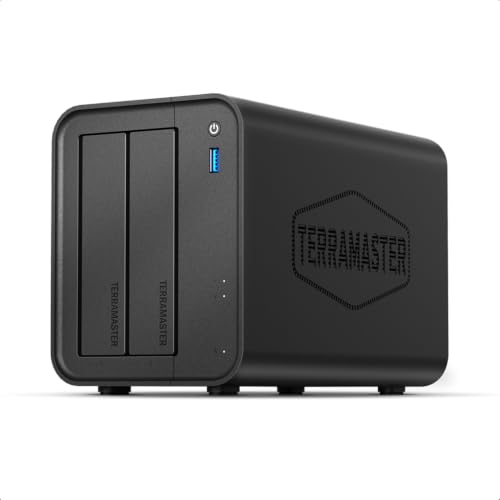 |
TerraMaster F2-425 Quad-Core NAS | Robust Intel quad-core processor | Excellent 4K transcoding capability | Dual gigabit network ports | View On Amazon | Read Review |
| Silent Speed Demon |  |
Asustor Flashstor 6 SSD NAS | All-SSD architecture for speed | Six dedicated M.2 slots | Compact, quiet design | View On Amazon | Read Review |
| Versatile Media Hub | 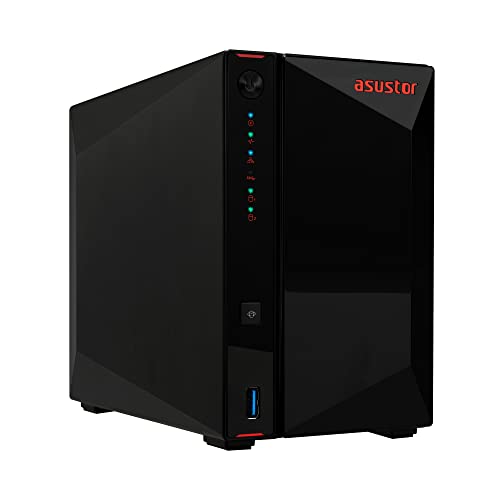 |
Asustor AS5402T Dual-Bay NVMe NAS | Four NVMe storage slots | Fast 2.5 gigabit networking | Responsive quad-core processor | View On Amazon | Read Review |
| Budget Transcoding Specialist |  |
Beelink N150 Mini PC | Extremely small physical size | Energy efficient processor | Low cost entry point | View On Amazon | Read Review |
More Details on Our Top Picks
-
TerraMaster F2-425 Quad-Core NAS
If you want to build a library that handles 4K media streaming without breaking a sweat, this is your best bet. The Intel x86 quad-core architecture acts like a dedicated engine for Plex, allowing you to transcode high-bitrate files efficiently.
It serves as a reliable home for your digital collection while keeping the CPU overhead low. You might find the software interface a bit less polished than the competition, but the underlying hardware performance for media tasks is hard to beat.
- Brand:TerraMaster
- CPU Type:Intel Quad-Core
- RAM Amount:4GB
- Form Factor:2-Bay NAS
- Additional Feature:Supports hardware accelerated transcoding
- Additional Feature:Dual network interface for speed
- Additional Feature:Tool-free hard drive installation
-
Asustor Flashstor 6 SSD NAS
This unit is for those who prioritize near-instant access and quiet operation. By utilizing six M.2 SSD slots, it eliminates the mechanical grinding noise of traditional drives, making it a stealthy addition to your living room setup.
The 2.0GHz quad-core processor ensures your Plex server remains responsive even when multiple users are streaming at once. Just be aware that you are limited to M.2 storage, which requires a bit more planning for your total storage capacity requirements.
- Brand:Asustor
- CPU Type:Quad Core 2.0GHz
- RAM Amount:4GB
- Interface Speed:2.5GbE
- Form Factor:6-Bay NAS
- Additional Feature:Dual 2.5 gigabit Ethernet ports
- Additional Feature:HDMI output for direct playback
- Additional Feature:Low-profile cooling system
-
Asustor AS5402T Dual-Bay NVMe NAS
This is an ideal pick if you need a flexible balance between traditional storage and modern NVMe performance. The inclusion of four M.2 slots allows you to keep your plex metadata on ultra-fast storage, which makes browsing your library feel snappy and responsive.
The quad-core processor manages background tasks smoothly, ensuring that your 4K streams don't stutter during peak usage. It does take up a bit of space, but the dual 2.5GbE ports provide plenty of bandwidth for even the most demanding home networks.
- Brand:Asustor
- CPU Type:Intel Quad-Core 2.0GHz
- RAM Amount:4GB
- Interface Speed:2.5GbE
- Form Factor:2-Bay NAS
- Additional Feature:Supports 4K HDMI video output
- Additional Feature:Hardware-based media encryption
- Additional Feature:Quick access hot-swappable drives
-
Beelink N150 Mini PC
Sometimes you do not need a full NAS system, and that is where this compact mini PC shines. It uses the efficient N100-based architecture to handle Plex transcoding tasks with surprising ease, acting like a tiny but fierce workhorse for your media needs.
You can simply attach your existing external storage or a network drive to get your server running in minutes. It lacks internal drive bays, but its low power consumption and small physical footprint make it a smart choice for a dedicated, low-cost Plex node.
- Brand:Beelink
- CPU Type:Intel N150
- RAM Amount:16GB
- Form Factor:Mini PC
- Additional Feature:Supports triple monitor setups
- Additional Feature:Integrated Intel UHD graphics
- Additional Feature:Silent fan cooling design
Frequently Asked Questions
Do I really need a dedicated graphics card if I have a good CPU?
Usually, you do not. A modern Intel processor with Quick Sync handles 4K transcoding efficiently on its own. Adding a graphics card often just increases power consumption and heat without providing a noticeable benefit for standard media streaming.
Will an AMD Ryzen processor work for my Plex server?
AMD chips are powerful, but they often lack the specialized hardware encoders found in Intel processors. You can certainly use them, but you will likely need to add a discrete GPU to handle the transcoding workload. This adds cost and complexity to your build.
How many 4K streams can a mid range CPU handle?
A modern processor with integrated graphics can often handle three to five simultaneous 4K transcodes. The actual number depends on the bitrate of your files and whether you are using high efficiency formats. If you have a large family, consider a higher tier chip with better integrated graphics performance.
Is it better to buy a used enterprise server or build my own?
Building your own is typically better for home use because you get modern features like low power idle states. Used enterprise gear is often loud, power hungry, and bulky. You will save a significant amount of money on electricity by choosing newer consumer hardware.
What happens if my CPU is not powerful enough for 4K?
Your media will likely stutter, pause, or fail to play entirely. The server will struggle to keep up, resulting in a poor user experience for anyone trying to watch a movie. If this happens, you should either upgrade your hardware or ensure your client devices support direct play to avoid transcoding altogether.